How Can Outdoor Lighting Improve a Deck’s Safety and Nighttime Usability?
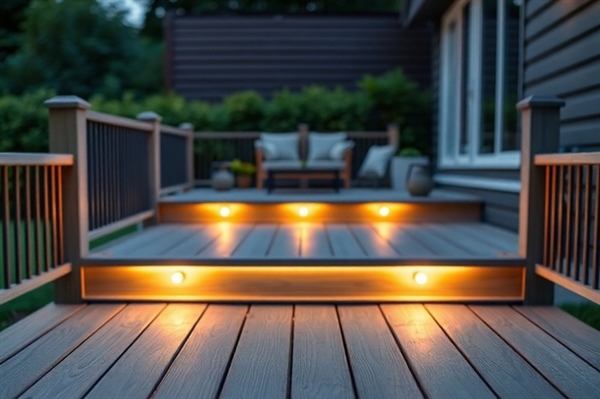
Outdoor deck lighting plays a direct role in how safely and comfortably a deck can be used after sunset. Thoughtfully placed lighting reduces trip hazards, clarifies elevation changes, and extends usable hours without overwhelming the space. On residential decks, low-voltage systems have become the standard because they balance visibility, energy efficiency, and long-term reliability. For homeowners investing in well-built decks, lighting is no longer treated as an accessory—it is part of the structure’s functional design.
Builders such as Premier Decks & Remodeling regularly see how lighting decisions affect real-world use, from navigating stairs in winter to hosting evening gatherings. This article examines how lighting improves safety and nighttime usability through five focused topics: selecting the right low-voltage fixtures, improving security with sensors and timers, applying lighting design principles for ambiance, choosing fixtures that survive cold climates, and understanding how wiring impacts deck construction. These considerations help explain why lighting is planned alongside layout and materials rather than added later. Learn more about professionally built decks and how lighting integrates into their design.
Low-Voltage Deck Lighting Options for Stairs, Railings, and Posts
Low-voltage lighting is widely used on stairs, rails, and posts because it provides consistent illumination while minimizing electrical risk. Stair lighting commonly relies on recessed step lights installed into risers or stringers. These fixtures cast light downward across each tread, making elevation changes visible without producing glare. Code guidance and industry studies show that illuminating each step reduces missteps and falls, particularly in low-contrast conditions such as snow or rain.
Railing and post lighting typically uses cap lights or integrated rail-channel LEDs. Post cap lights define deck boundaries and corners, which helps users orient themselves spatially at night. Rail lighting installed beneath top rails creates a soft wash of light across walking surfaces. Low-voltage systems operate at 12 volts, which allows multiple fixtures to be connected safely while maintaining uniform brightness across the deck.
These lighting approaches are commonly incorporated into modern decks because they balance safety, durability, and visual clarity. Fixtures designed for outdoor use are sealed against moisture and rated for continuous exposure, which supports long-term performance in residential deck applications.
How Motion Sensors and Timers Improve Deck Security and Visibility
Motion sensors increase deck security by activating lighting when movement is detected, which removes dark zones around stairs, entry points, and yard-facing edges. Sudden illumination draws attention to activity and discourages unauthorized access. From a safety standpoint, motion-activated lighting ensures users are not stepping into unlit areas when exiting a home at night.
Timed lighting systems improve consistency by turning lights on and off at set intervals, often aligned with sunset and sunrise. This removes reliance on manual switches and ensures decks remain visible during common evening hours. Timers also reduce energy use by preventing lights from remaining on overnight.
When combined, sensors and timers create layered lighting control. Timers provide baseline illumination, while motion sensors deliver targeted brightness when needed. This approach is commonly applied in residential exterior lighting design because it improves safety outcomes without increasing electrical load.
Deck Lighting Design Principles That Improve Nighttime Ambiance
Effective nighttime ambiance depends on layered lighting rather than a single bright source. Layering combines task lighting for walking surfaces, accent lighting for architectural features, and ambient lighting to soften shadows. This method mirrors principles used in interior lighting design and is supported by outdoor lighting engineering standards.
Warm color temperatures between 2700K and 3000K are commonly used on decks because they reduce glare and maintain visual comfort. Studies on outdoor environments show that warmer light improves depth perception at night and supports longer visual adaptation compared to cooler tones.
Uniform spacing and controlled beam angles also affect ambiance. Fixtures aimed downward or shielded prevent harsh hotspots and reduce light spill into surrounding areas. These design principles allow decks to remain functional while maintaining a relaxed nighttime atmosphere.
Outdoor Lighting Fixtures Built for Michigan Freezing Temperatures
Cold-climate performance depends on fixture materials, sealing methods, and wiring insulation. Brass, copper, and powder-coated aluminum fixtures perform well in freezing conditions because they resist corrosion and cracking. Plastic housings without UV stabilization are more likely to become brittle over repeated freeze-thaw cycles.
Fixtures rated for wet locations include gaskets and sealed lenses that prevent moisture intrusion. This is critical in climates where melting snow refreezes, as trapped moisture can damage internal components. LEDs themselves tolerate cold well, often performing more efficiently at lower temperatures than in heat.
Low-voltage outdoor lighting systems designed for northern climates account for ground frost movement and seasonal expansion. Proper fixture selection supports long-term reliability through winter exposure.
Why Integrated Lighting Wiring Matters During Deck Construction
Integrated wiring planning affects structural layout, fastening methods, and long-term maintenance access. When lighting is planned during construction, wiring can be concealed within framing members and protected from foot traffic and moisture exposure. This reduces the need for surface-mounted conduit later.
Transformers, junction points, and wire pathways are positioned to meet electrical clearance requirements while remaining accessible for service. Planning also ensures voltage drop calculations are accurate, which keeps light output consistent across all fixtures.
Builders such as Premier Decks & Remodeling coordinate lighting layouts with framing plans so fixtures align with posts, stairs, and rails without compromising structural integrity.
Professional Deck Lighting Planning and Installation
Premier Decks & Remodeling designs and builds decks with lighting integrated from the start, allowing safety, usability, and durability to work together. Their construction process accounts for fixture placement, wiring protection, and long-term performance in cold-weather environments. This approach supports safer stairs, clearer walking paths, and reliable nighttime use.
Premier Decks & Remodeling serves homeowners seeking decks that function well in all seasons. Their team applies proven construction methods and lighting standards to each project.
To discuss deck lighting, layout planning, or construction details, call 763-238-6195 or visit their contact us page.