What Are the Most Important Steps in Planning a Custom Deck Layout?
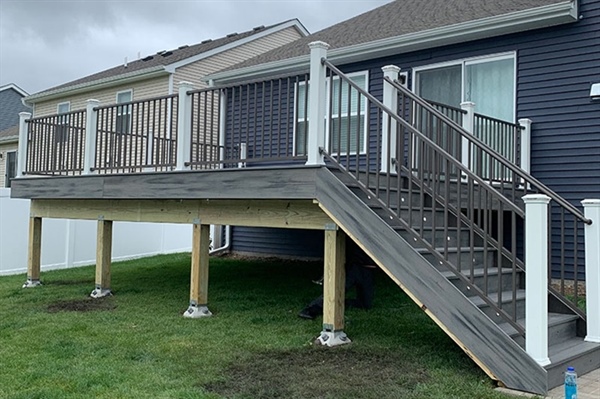
Planning a custom deck layout requires careful consideration of how outdoor space will be used, how it interacts with the home, and how environmental conditions affect long-term comfort and performance. A well-planned deck is not defined by size alone. It is shaped by movement patterns, functional zones, exposure to sunlight, prevailing winds, and the integration of structural and utility elements. These factors determine whether a deck feels intuitive and usable or constrained and underperforming. Homeowners who invest time in layout planning tend to achieve outdoor spaces that remain functional across seasons and changing household needs.
At Premier Decks & Remodeling, deck planning discussions often begin with understanding how space will be occupied and how people will move through it during everyday use and gatherings. Questions such as how to size a deck appropriately, how to organize seating and walkways, how to orient the structure for comfort, and how to prepare for integrated features all influence layout decisions. This article addresses those considerations in detail, drawing from proven deck design principles and construction practices commonly applied in custom decks to create outdoor environments that are structurally sound, adaptable, and comfortable over time.
Each section below examines a specific aspect of deck layout planning, including determining the right deck size, managing traffic flow, accounting for sun and wind exposure, designing multi-zone outdoor living spaces, and planning for electrical or kitchen features. Together, these elements form the foundation of a layout that supports both daily use and long-term durability.
How to Determine the Right Deck Size for Your Property
Determining the correct deck size begins with evaluating the physical constraints of the property and the functional demands placed on the outdoor space. Property setbacks, lot coverage limits, and elevation changes all place measurable limits on how large a deck can be built. These factors are governed by local building codes and zoning regulations, which define allowable square footage, structural spans, and stair placement. Ignoring these parameters often results in designs that require costly revisions once permitting begins.
Equally important is aligning deck size with how the space will be used. Seating capacity, furniture dimensions, circulation clearances, and access points from the home all influence minimum and maximum dimensions. Industry design standards recommend maintaining clear walk paths of at least 36 inches between seating areas and structural elements to support safe and efficient movement. Oversizing a deck without considering these use patterns often leads to underutilized areas that increase construction and maintenance costs without adding functionality.
Custom layouts frequently account for proportional balance between the home and the outdoor structure. A deck that visually overwhelms the rear elevation of a house can feel disconnected, while one that is too small may limit adaptability over time. This balance is commonly achieved through scaled planning techniques used in custom decks, where square footage is tied directly to intended activities rather than arbitrary dimensions.
Planning Traffic Flow and Seating Areas in a Deck Layout
Effective traffic flow planning prevents congestion and reduces wear on high-use areas of a deck. Movement paths typically originate from doorways and stair landings, then branch toward seating, grilling, and transitional zones. Professional layout planning places these paths first, treating them as fixed corridors that seating and features must accommodate rather than obstruct.
Seating areas function best when grouped by activity and oriented away from primary walkways. Dining zones require additional clearance for chair movement, while lounge seating benefits from defined boundaries such as railings, planters, or changes in decking direction. Research in outdoor ergonomics supports spacing that allows seated users to remain undisturbed by foot traffic, which improves long-term usability during gatherings.
Traffic-aware layouts also reduce safety risks by minimizing abrupt direction changes near stairs and elevation transitions. Decks that integrate these principles from the outset tend to maintain consistent flow even as furnishings change over time, preserving usability without requiring structural modification.
How Sun Exposure and Wind Patterns Influence Deck Placement
Sun exposure directly affects surface temperature, glare, and seasonal comfort. Southern and western exposures receive higher solar loads, which can increase heat retention on decking materials and reduce usability during peak summer hours. Placement decisions often incorporate partial shading strategies such as rooflines, pergolas, or strategic orientation to balance light and comfort.
Wind patterns are equally influential, particularly in elevated or open-yard settings. Prevailing wind directions vary by region and should be evaluated using site-specific observation rather than assumptions. Consistent crosswinds can limit the effectiveness of outdoor kitchens, fire features, and loose furnishings if not accounted for during placement planning.
Deck layouts that account for both sun and wind patterns often extend seasonal usability by several months each year. These considerations are supported by building science research, which shows that microclimate-aware placement improves comfort without reliance on mechanical solutions.
Features to Include in a Multi-Zone Outdoor Living Design
Multi-zone deck designs divide space into functional areas such as dining, cooking, lounging, and transition zones. Each zone is defined by use rather than physical separation alone. Changes in elevation, decking orientation, railing style, or built-in elements often provide sufficient definition without interrupting visual continuity.
Successful zoning depends on adjacency planning. Cooking areas benefit from proximity to indoor kitchens, while lounge zones often perform better when positioned away from high-traffic entries. Fire features, privacy screens, and storage elements are typically integrated as anchors that reinforce zone boundaries while serving practical purposes.
Well-executed multi-zone layouts improve adaptability as household needs evolve. This approach aligns with current outdoor living standards, which emphasize flexibility and long-term use over single-purpose designs.
Planning Electrical, Lighting, and Outdoor Kitchen Integrations
Utility planning must occur early in the layout phase to avoid structural conflicts and code violations. Electrical conduit routing, load requirements, and fixture placement influence framing design and material selection. Outdoor-rated wiring systems are governed by national and local electrical codes, which dictate burial depth, GFCI protection, and weather resistance.
Lighting design supports both safety and usability. Stair lighting, pathway illumination, and task lighting around cooking areas are considered baseline requirements. Layered lighting strategies improve visibility without excessive brightness, reducing glare and energy consumption.
Outdoor kitchen integrations require coordination between structural, electrical, and ventilation planning. Appliance clearances, fuel supply routing, and heat management must be addressed in advance to maintain code compliance and operational safety. Information on these integrations is typically coordinated through the planning resources available at Premier Decks & Remodeling.
Premier Decks & Remodeling applies structured planning methods to every custom deck project, drawing on site analysis, code compliance knowledge, and proven construction practices. From early layout evaluation through feature integration, their process emphasizes durability, comfort, and long-term usability across all outdoor living designs.
Based in Isanti, MN, Premier Decks & Remodeling works with homeowners to address deck sizing, circulation planning, environmental exposure, zoning strategies, and integrated utilities. Their team applies region-specific construction standards to ensure each project aligns with local requirements while supporting functional outdoor living.
Homeowners interested in professional guidance can connect with Premier Decks & Remodeling at 763-238-6195. To discuss project planning details or request additional information, visit their contact us page.